

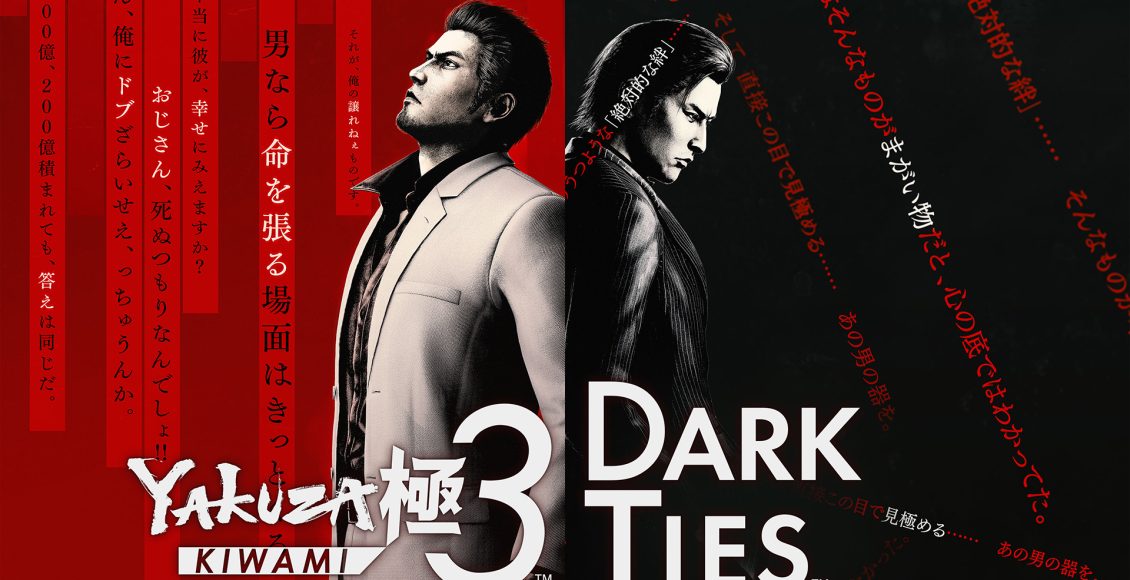
Who is a video game remake supposed to be for? Remakes and remasters in the video game space become popular due to fan demand of having classic titles be playable on modern platforms. The transition from 7th generation consoles (PS3, Xbox 360) to the 8th generation (PS4, Xbox One) had no backward compatibility support at launch. So it’s a willing seller and willing buyer situation, fans wanted to play their favourite games again, publishers get the opportunity to capitalise on the double-dipping potential, and developers get another chance to adjust and add to original title they are remaking or remastering, with the intention of making it a more enticing offer.
So when Sega and Ryu Ga Gotoku Studio announced that Yakuza 3 is next in line to be getting the Kiwami remaster treatment, which comes together with a Gaiden spin-off game as a 2-in-1 offer, that sounds like good deal. RGG Studio gets a do-over and make one of the least favourite numbered entry in the long-running franchise some much needed love.
And if Sonic X Shadow Generations is of any indication, the idea of pairing a remake/remaster with a whole new spin-off game with an edgy tone and edgier protagonist could lead to critical and financial success.
But after playing through both Yakuza Kiwami 3 and Dark Ties, I’m left with mixed feelings.
Personally, as a more recent Yakuza/Like A Dragon fan who never played Yakuza 3, I enjoyed my time with what’s offered here. But as someone who had played a few of the more recent Like A Dragon games, a series that has now new releases every year, I have a feeling fans who played more Like A Dragon games as I had would fairly want to sit this one out at launch.
You probably played this game before, and I’m not talking about the original, or the remastered, Yakuza 3.

Presentation
RGG Studio’s in-house game engine appropriately named Dragon Engine was introduced 10 years ago and I remember vividly how amazing of an graphical upgrade it was. The PS4 game Yakuza 6 looked like it’s made for a PS5 that would only exist four years later. It looks stonking good, pushed the limits of that 8th-gen console that it looks like a next-gen game.
But looking at the Dragon Engine today, 10 years later, and it feels like the graphics has lost some of its lustre. The lighting in particular is a sore spot. Sure, the nights in Kamurocho looks properly atmospheric with that slight green-blue hue tinge it has to the world, contrasted nicely by the dazzling lights you see in front of most shops in this seedy side of Tokyo. But man, it looks off in bright daylight, especially in tropical locales.
The new setting of Downtown Ryukyu (a fictional town based on the real town of Naha) in Okinawa can look a bit off in bright daylight. It looks overblown, protagonist Kiryu’s skin looks a little off when under the sun, and in shines a bad light to the intentionally dingy and grimy textures you see in this part of town.
Downtown Ryukyu has the charm of an old town with some recent urban development, but the buildings here have been around for some time where you start seeing decay, rust and grime. Doesn’t help that it’s a tropical, hot and humid setting. But you can see some of the textures look off. They are too detailed for their own good, but also had to be shrunk to a smaller file size and now it ends up being pixelated. These textures don’t blend as well it supposed to, making the place look jarring in the wrong angle.
While Okinawa is just as much as a tropical land as Hawaii (as featured in Like A Dragon Infinite Wealth and last year’s Like A Dragon Pirate Yakuza In Hawaii), the latter looks fine. Okinawa doesn’t look fine, the vibes are not quite right, in particular the south side of the map where it supposed to be more run-down-looking but comes off sloppy.


It’s alarming that fans are sharing around graphics comparisons between Yakuza 3 Remastered and Yakuza Kiwami 3 around, and the former looks more cohesive and pleasant to the eyes than the “extreme” remake.
Granted, there is a day-1 patch that addresses some of the visuals—the odd lighting of the river in Downtown Ryukyu as seen in the demo in particular has been improved to not look as egregious, but don’t expect a miracle. The overall look of Downtown Ryukyu can look not quite right.
The Dragon Engine character models for Yakuza Kiwami 3 may not be as expressive as Yakuza 3 when you compared screenshots, but they look just fine in the cutscenes as they are played. Don’t quite look as nice when you see them through screenshots, however.
Sure, the characters lack a bit of the exaggerated expressions and their face can appear stiff if it’s not a full-blown, motion-captured cutscene (there are some cutscenes that use the higher-detailed models but make use of the pool of animations seen in gameplay). But the emotional gravitas on these scenes are not lost. It helps that the Japanese voiceover is as stellar as you’d expect. Punchy, clear, filled with character.
I did switch between the Japanese and English voiceovers, and while I think the EN dub is fine and certainly had work being put in, I’m still not convinced into switching to playing in full English. It’s not for me, I still prefer listening to most of the dialogue in Japanese (which I don’t speak and only have elementary understanding of) and read the subtitles.
There’s something about still hearing Japanese in the ambient crowd, or troublemakers still shouting at you in Japanese, and the lack of oomph from Kiryu’s battle noises that takes me out. The karaoke songs in English dub is a hoot, as you’d expect, and Kiryu sings a lot more sings in this one.

Speaking of the voiceover, it’s time to address the elephant in the room: the controversial recast. RGG Studio has over the years gotten real-life actors to not only lend their voice but also their likeness for Yakuza/Like A Dragon characters. But for Yakuza Kiwami 3 & Dark Ties, established characters have not only been recast, but they also look like completely different people than the original game, so to match the new celebrity talent.
Rikiya, the young yakuza from Okinawa looks less like an awkward kid that needed growing up and more like a supporting cast member for a tokusatsu show that will eventually get that glow-up to be the main hero one day. But fret not, he still comes off charmingly awkward in the scenes you’d expect him to be so.

The other, big controversial recast especially among the English-speaking Yakuza/Like A Dragon fans online, is for the character Hamazaki. The big dude that’s big on scheming and conniving throughout the game is replaced by, let’s just say as a problematic person in the eyes of the community.
The devs are adamant they got the right person for the role, even if it means changing the big brute into an older man of a smaller size for the Kiwami remake.
And it pains me to say that they’re right: dude chews up scenery like he’s the biggest bad in the room. Proper menacing in that one scene, believably human in that other tense scene, both of which is just him negotiating a deal but sitting in the metaphorical different sides of the power dynamic table. Those were memorable performances.
A small nitpick, but the voice mix sounds rather inconsistent. From one scene to the next, you can hear the voices of the same characters don’t sound quite lined up in terms of audio quality. Not that one is worse than the other, but noticeably different when it shouldn’t.

As we’re talking on the audio side here, let’s give some flowers to the soundtrack. The new songs, or new-to-me at least, are fantastic. Dark Ties in particular is a highlight with a lot of smooth jazz juxtaposed with a few beats of emo-screaming, bass-drum-pounding heavy metal. This should be no surprise for a Like A Dragon game to have a fantastic soundtrack, but Yakuza Kiwami 3 & Dark Ties is not exception.
I don’t know what to feel about having newer songs from the Like A Dragon soundtrack retroactively appearing in Yakuza Kiwami 3 & Dark Ties, set from 2007 to 2009, though. Honolulu City Lights is a banger of a citypop beat, but its appearance here means that this isn’t a song made during the new wave of citypop within the universe’s timeline, Chitose from Like A Dragon Infinite Wealth happens to love 15+ years old song that’s popular in Japan that it’s her go-to karaoke song.
This is just the first of many retroactive foreshadowing that Yakuza Kiwami 3 & Dark Ties employs. And this isn’t the only song that’s lifted right out of Infinite Wealth.
Heck, there’s even more songs from other Sega and Atlus games that you can play in your CD player to listen to while free roaming. Ever want to stroll Kamurocho with the Angry Birds theme? Sure. No Bad Piggies theme, though. How about music from Total War: Pharaoh? Why not.

Other than those points, presentation-wise you can expect more of the same of Yakuza Kiwami 3 & Dark Ties with the past Like A Dragon releases over the recent years.
Which also means, for the base PS5, this title continues to have this one flaw: it can make your PlayStation run hot. The PS5 versions run at a silky-smooth 60 FPS (at least that’s what my eyes see it as such) with barely a dropped frame or stutter. But the cost? Multiple, regular PS5 temperature warnings that can happen in particular places, like when entering a convenience store, or when you reach the boss of Dark Ties’ main mini-game (more on that later).
I have to regularly pause the game or go to the PS home screen for a bit and wait for the fan to slow down and hope that whatever the background processing that heats up the PS5 stops and the console can cool down. I played Infinite Wealth on the same console and it too regularly caused temperature warnings. And I do regularly clean the console’s fans. Hasn’t happened in other games new or old. Surely this is a recurring issue in the Like A Dragon games, and I expected this issue had been addressed or fixed. It hasn’t, which is a shame.

Gameplay
In Yakuza Kiwami 3, protagonist Kazuma Kiryu and his adopted daughter Haruka leaves Kamurocho behind and they now get to live in peace running an orphanage in Okinawa. The ex-Yakuza that, for some reason, continued to be pulled into the underworld for the last 20 years finally gets a quiet life. Or so it seemed. Two years later, in 2009, Kiryu is once more pulled into a conflict and conspiracy involving the Yakuza revolving around a plot of land (again).
Yakuza Kiwami 3 is a retelling of the same story in Yakuza 3, with some minor changes.
Dark Ties meanwhile is technically Yakuza 3 Gaiden. The third one following Like A Dragon: The Man Who Erased His Name (starring special agent “Joryu”) and last year’s Like A Dragon: Pirate Yakuza In Hawaii featuring Goro Majima.
Dark Ties is the story of how Yoshitaka Mine, a key character in Yakuza 3, rose up the ranks in the Yakuza, all during the time when Kiryu is away from Kamurocho and lived happily with his adopted kids. It’s the first time Mine becomes a playable character, and serves as a window into the cold-hearted, pragmatic, business-shrewd character we only see appeared once in the series, until this release.

The “double-feature” is technically two games, where you can freely switch between at the title screen, each with separate save slots. You can play any of them in any order, but if you’re starting with Dark Ties first, you’ll be issued a warning that this game will spoil the ending of Yakuza Kiwami 3.
The head’s up is nice, but it’s weird, especially when clearing Dark Ties first will net you some unlockables to bring over to Yakuza Kiwami 3. If the game offers an option to roll the credits a few scenes earlier and allow players the option to view the extra, Kiwami 3-spoiling part of the ending later, it wouldn’t need a spoiler warning in the first place.
That said, the spoiler only comes right at the end, so feel free to play Dark Ties a bit before going into Kiwami 3 proper, if you’re just here to check out the new campaign. Everything outside of the ending is its own standalone story not related to Yakuza Kiwami 3.

Yakuza 3 has a bit of reputation as it was one of the earlier games to use the unnamed proprietary engine before the Dragon Engine. The PS2 games Yakuza and Yakuza 2 played more like RPGs with segmented maps and fixed camera angles. Like A Dragon Kenzan (the period setting Yakuza/Like A Dragon game yet to have an English worldwide release, unlike Like A Dragon Ishin) and Yakuza 3 were the first instances of the Yakuza games going full open world, with new graphics and new gameplay systems.
Those were rough times. Combat was reported to be difficult, the game feel is a far cry from the quality of modern Yakuza releases. It was rough, but that’s understandable. They were pushing boundaries with the new tech they had.
In contrast to the original, Yakuza Kiwami 3 is a safe, conservative game. It reuses a game engine that had matured and aged, gameplay that had been calcified with regular releases and spin-offs (shout out to Judgement and Lost Judgement), and it efficiently makes use of existing assets and systems to recreate this remake Yakuza 3 and the new Yakuza 3 spin-off game, Dark Ties. Maybe too efficiently.

There’s nothing to worry about difficulty, as Yakuza Kiwami 3 brings that familiar Dragon Engine brawling combat system to Okinawa. Kiryu seamlessly enter fights against the various troublesome men that wanders Downtown Ryukyu and Kamurocho. You can immediately start beating up the foolish men challenging the Dragon Of Dojima just as the title cards to signal a battle appears, and they end as seamless as they start, with all the bodies which you punched and kicked the hell out of that their yen bills and coins shower the streets (and into your pocket), dematerialise in an instant.
If you’re not a fan of having to manually sprint and manually engage in the sort-of lock-on stance to do quicksteps (dodges), there’s a quality of life option that lets you automatically sprint and dodge without pressing extra buttons. There are also modern AAA tricks, like a spidey-sense-esque ping to alert you of incoming gun shots. Attacks can feel punchy thanks to good use of hit-stops.

Some may associate the Dragon Engine combat as “floaty” but personally, I feel it feels as sharp as it could be, as long as you’re not walking and running as much (which remains intently cumbersome. Characters move realistically like a Red Dead Redemption 2 protagonist, clumsily). Grabbing items as impromptu weapons is still a hit-or-miss affair, though.
The combat system is easy to understand and just as easy to play. Mashing buttons can get you far, but the occasional enemy that knows how to block and mini-bosses/bosses with immense aura where you need to dodge possibly fatal strings of attacks will force you to lock in. If anyone complains about “Blockuza” then that’s a skill issue. Grab that goon and throw. Don’t just spam the same combo. Fighting game fundamentals work in this beat-’em-up. Performing perfect dodges and blocks are easy with lenient timing windows, but performing the follow-up Heat action isn’t. If you press the button prompt when it appears and the move doesn’t happen, that means you were mashing buttons. The game demands precise button inputs for that, dodge, any attack button then trigger the Heat action.
It may be a 10-year-old system, but the combat system has been so dialled in and man, I love how Dragon Engine handles fisticuffs. It’s so cool. It’s still cool to me, but granted the last game I played with this combat system was Like A Dragon Gaiden, and nothing else. So admittedly I’m not exactly well-versed with the combat system compared to most fans.
But I don’t need to be a longtime, diehard fan to fairly say that Yakuza Kiwami 3 & Dark Ties lacks proper innovation and relies way too much in repurposed content, assets and systems.
Don’t get me wrong, clever reuse of existing assets is a smart way to develop sequels. With AAA games taking years, even half a decades worth of a wait even, to have a sequel about every year or so is something fans love to have.
But there’s going to be a point when the magic runs out and fans stop seeing this efficiency as working smart but rather a cheap cash-grab to get suckers paying full price for a game they might have played before. And this is even more compounding for a remake or remaster, where it is based on a game fans may have previously played before already.

And you can see this in the combat. While the fundamental system is sound, there’s not much new added to it. Sure, Kiryu gets a whole new Ryukyu fighting style where every button input will have him conjure different traditional weapons from the default buckler and short spear to electrifying tonfas. But this feels like Majima’s Pirate style but without the air combos, so it’s worse. It still provides good utility and fun to use, but they made a cooler system last year.
In Dark Ties, Mine has a different but similar moveset that doesn’t take much to adjust to, but its gameplay gimmicks are less game-changers, but more fun nods to fans who knew Mine from Yakuza 3. Like how Mine can have different coloured Heat that changes his moveset from fast shootbox-inspired jabs and knee kicks to unhinged arm swings.
Mine can even heal, which is a peculiar move since you are better off pausing and swig a Staminan than use up the Dark Awakening bar to top up your health. It makes more sense when you know who Mine, the enemy boss, is, as it’s a nod to his existing portrayal.
Essentially, it’s not as drastically exciting the new fighting styles in this game(s). If all you do is mash the same buttons over and over, you wouldn’t feel that much of a difference. It’s not as impressively different fighting style compared to Like A Dragon’s Agent style, or as mentioned previously Pirate Yakuza’s Pirate style.

Yakuza Kiwami 3 doesn’t retain the Revelation system, where Kiryu learns new Heat moves by observing (not-so) ordinary life events that inspires him to blog and invent said Heat move. It’s a shame that we didn’t get new ones, as the skill upgrades in Yakuza Kiwami 3, and Dark Ties, are lame. It’s a simple skill tree that only have at most three branches, with only a handful of learnable Heat skills. It also looks rizzless.
Sure, the Sphere Grid-esque skill tree from Yakuza 0, Yakuza Kiwami, Like A Dragon Ishin and a few other games from that era is just extravagant, superfluous design. But it’s more fun to progress through. The simplified skill tree separates stat upgrades from skill upgrades and as a result I am just not interested in putting money into improving stats (well, outside of the attack power improvements).
You don’t really get a good sense of progression, the RPG part of what supposed to be an action-RPG. Yakuza Kiwami 3 & Dark Ties is more of a straightforward action-brawler, because its RPG systems are weak. Kiryu can customise his passive buffs through the new cellphone customisation system, but it isn’t impactful and I ended up setting it once and forgetting about it. Dark Ties has it worse, Mine’s skill growth is only the skill trees, so there’s no potential builds to create here.

As far as exploration goes, Yakuza Kiwami 3 has a cool new (at least new-to-me) feature. And it’s related to the new cell phone customisation system. Kiryu gets a new flip phone with the ability to hook up with fellow cellphone users of the same plan (imagine Nintendo StreetPass that only works when you actively signal two devices together) and connect with them in a sort-of social media app.
There’s also the ability to remotely open search boxes hidden around Downtown Ryukyu and Kamurocho. The boxes are laid on the ground, they can appear up high and you can use the new (to me) third person view via Search Mode to unlock them. Now there’s a reason to actually look up and around and not just scour the ground, that’s cool!
Not sure about the social app, though that’s basically a reskin of the Aloha Link Friend system from Infinite Wealth. That app doesn’t strike me as something that would exists in 2009. It’s no MySpace, not even Facebook-esque.
With no Revelation system, we lost all proper depictions of social media as we knew it in that time period, there’s none present in Yakuza Kiwami 3 & Dark Ties.


Unfortunately, there’s not much reason to explore in Dark Ties, but that feels comparable to Like A Dragon Gaiden. And similar to Like A Dragon Gaiden, a lot of the exploration and side content is all housed under one system. The Kanda Damage Control menu is like Like A Dragon Gaiden’s Aka Network where you can start a substory and find a checklist of milestones.
The whole “do good deeds” beat also feels structurally similar to the Part Time Hero system from Yakuza: Like A Dragon, from completing fetch quests where you need buy items from convenience stores to beating up troublesome men and problematic people. It all feels… played out. You’re not out to explore in Dark Ties, you’ve been around Kamurocho before.
Also, why is the Kanda Damage Control UI is skinned as a faux Windows XP computer? It’s 2007, I would’ve thought that since there’s a proper tech whiz in the Nishikiyama Family who works on a laptop, a rare sight to see back then, at least they would have a faux-Windows Vista UI. But maybe that yakuza folks were happy to stick with faux-XP for a long while still.

Essentially, Yakuza Kiwami 3 & Dark Ties’ biggest letdown is how samey it is. A remake should be exciting. It’s an opportunity to experience something that was familiar in a fresh way. But the remake’s over-reliance on repurposing existing systems, mechanics and content ends up making the familiar be even more familiar.
When Yakuza and Yakuza 2 got the Kiwami remake treatment, it’s a big deal because they play immensely different from the source material. There’s a big leap in tech to justify revisiting the same entries again. In some way, Like A Dragon Ishin (which is also technically a Kiwami game as it is titled so in Japan) was a cool experiment in having the game run on Unreal Engine while still retain that pre-Dragon Engine game feel.
The reason Sonic X Shadow Generations worked well as a 2-in-1 double feature release is that Shadow Generations, as a spin-off title, is actually pretty decent. It gives fans confidence that the developers are heading in the right direction and their next proper high-speed 3D platformer would be a promising one should they nail the execution as seen in Shadow Generations.
I can’t say anything of the same magnitude for Yakuza Kiwami 3 & Dark Ties. This is like seeing a new limited-time menu on a fast food chain and you see that it’s just a new way of reusing the same ingredients you’ve had before.
For those never played the original Yakuza 3, and haven’t played a Like A Dragon game for a while, Yakuza Kiwami 3 & Dark Ties is perfectly fine, well put-together video game. You can have a fun time with it. Like A Dragon games have always have a high floor in terms of quality.
But for fans that have been buying and playing these games every year, I really can’t say why you want to play a game you’ve probably played already in some form, unless you really like Yakuza 3 and haven’t played much of the new releases to notice the rehashed gameplay elements.

Content
Like any Yakuza/Like A Dragon game, there is a wealth of content to keep you busy in Yakuza Kiwami 3 & Dark Ties. A lot of the mini-games are shared between Yakuza Kiwami 3 & Dark Ties. Kiryu and Mine can go bowling, play golf (albeit at a driving range instead of at an actual country club), play darts and pool at a bar, swing a baseball bat at the batting center, gamble, play mahjong and shogi, the whole shindig. There are some differences in what the content of the mini-games are—Mine only sings one song (Baka Mitai, obviously) in karaoke while Kiryu (and Haruka) has at least 15. Dark Ties curiously has more access to emulated arcade games including previously featured games Fighting Vipers, Virtua Fighter 2 and Virtua Fighter 2.1.


Yakuza Kiwami 3 has two long-form mini-games (think the size of Ichiban Holdings in Yakuza Like A Dragon and Dondoko Island in Like A Dragon Infinite Wealth): Bad Boy Dragon and being Daddy for the Morning Glory kids. The former has Kiryu join a gal gang to help out a friend’s daughter beat the rival bosozoku gang from Tokyo terrorising Okinawa. Recruit members each with different movesets and abilities, level them up, bring them to brawls, and participate in battles where you assault a base, helping the squads struggling to autonomously beat the enemies in their lanes, or participate in an all out 20+ VS 20+ brawl.
Bad Boy Dragon is pretty entertaining, it has this Musou-like feel in that you can feel like a badass clearing a whole room of 20+ goons all while your AI teammates doing their part. And many other mini-games feedback into Bad Boy Dragon. It’s not as elaborate as it appears to be, and gets samey rather quick, but it sure is cool to recruit a lady with a chicken head that fires non-stop machine gun bullets as you call in support to unleash a stampede of wild boars, all just to beat up some biker gangs. Proper Yakuza-type stuff.


The Morning Glory mini-games are a much laid-back contrast to the high-octane of Bad Boy Dragon.
Kiryu can tend to a farm, help kids with their homework (reusing the exams seen in Yakuza Like A Dragon and Like A Dragon Infinite Wealth, but with more elementary level trivia questions), fishing for fish (it’s just throwing a harpoon like in Infinite Wealth, but much more arcadey and faster paced), compete with the kids in bug catching (which plays out like a Mario Party mini-game, complete with a victory screen where the losers solemnly clap their hands in the background), play reversi (which is just a board game, but the presentation goes so hard to sell that it’s a yakuza war and seeing the kids’ portraits juxtaposing the super-serious underworld presentation is hilarious), cook meals and most unique of all: sew crafts with the sewing machine.


For some reason, the way the sewing machine mini-game works is that it feels like an unintuitive racing game where there’s no brakes (only a speed dial adjustment) and you must stay within the margin (the road, if you will) and reach the goal before time runs out. Complete with direction indicator. Yeah, this is a rally game hidden behind Kiryu making some neat patterns to go on pillows and napkins. The first “track” is a brick-shaped oval where you only turn left. It’s not as easy as it sounds, as fans of a certain American open wheel racing series would know. Whoever designed this knows ball.
The whole homesteading thing you do as part of the Morning Glory management feels like a riff on Like A Dragon Ishin, but it’s different enough to not feels like complete systems are reused. It is heavily inspired. The cooking mini-games really reminds me of Ishin, even if the mechanics are using systems from more recent titles.

It may not mean much to players, but the Morning Glory content is absolutely wholesome and heartwarming. Kiryu gets to unleash his inner cringey dad energy and it’s absolutely magnificent to behold. Even Haruka is taken aback at how ol’ Uncle Kaz can be such a dork. He really tries his darndest to be the dad these kids need. And you get to follow completely new bond links with each of the kids except Haruka. In the original Yakuza 3, you can do optional content the improves your link with Haruka and Rikiya, but these have been rolled into the main story. The links with the rest of the kids replaces that, and it’s a good call.
Knowing how Kiryu cares so much for the orphanage helps make the stakes of the story and its conflict within Yakuza Kiwami 3 that much more meaningful, and also sets up for future (past?) games. That scene from Like A Dragon Gaiden hits even more, for sure.
Speaking of the story, Yakuza Kiwami 3’s story takes some time to start. The pacing is slow at the start on purpose. The prologue is an extended epilogue for the previous game in the timeline Yakuza Kiwami 2. There’s an option to watch a recap of Yakuza Kiwami and Yakuza Kiwami 2, about an hour length of a super-cut, before you start the game proper.
When you do reach Okinawa, the first few chapters are also slower-paced. There’s drama being built up, but you’re expected to relax and take your time as the game opens up all the side content.

But once you’re dropped back to Kamurocho the pace picks up at lighting speed, with an intriguing plot to see unfold that has all kinds of twists and turns.
Well, there’s one twist you probably see coming if you didn’t know by now. Yakuza 3’s story is framed as a whodunnit where Kiryu and his associates slowly work out who’s the traitor within the Tojo Clan. But you’ll definitely work it out immediately.
In contrast to the wealth of content in Yakuza Kiwami 3, Dark Ties doesn’t offer much. This game could be rushed through in five hours, but its side content does a heavy enough lifting to double up that playtime easy.


Dark Ties has the Hell Arena, an interesting take on a dungeon crawler mode. It has collectible passive buffs, a time limit to pressure you to dungeon crawl fast, and most curious, an extraction mechanic. Hell Arena is where you can gain big money fast, but if you run out of health, and you can’t heal with consuming consumables in this mode, all the money and upgrades you collect are lost. Enemies grow exponentially stronger in each phase, and it’s often the wise move to bank that cash instead of risking it all.
On top of that, you can also recruit NPC mercenaries to help take out the massive number of enemies littered in the dungeon, for a price. This makes it even more painful if you don’t cash out—you’re losing money out of the merc recruitments. And having them also means you need to earn more money to earn a profit which you can then invest on more upgrades so you can be stronger and tackle the harder dungeons.
I initially had loads of fun with Bad Boy Dragon, but I feel like this mode has appeared in a previous game I haven’t played. Hell Arena feels proper fresh on a systems level. If only the maps are not just the same dingy underground rooms and corridors with a ridiculously high ceiling. Fun to play, tiring to look at.
But that’s really it for Dark Ties’ side content. There are substories but they’re nothing spectacular. It does show off Mine’s more ruthless, pragmatic side.
Kiryu’s substories (which are very different from the original Yakuza 3 offer) can be more fun and silly as you’d expect, playing up on his newfound daddiness, him learning more of the town he now resides peacefully in and the usual non-canon shenanigans, including a special guest appearance by Wada Akiko.


While I have raised some eyebrows regarding how authentic the game portrays its time setting which one can now consider a period piece (2009 was 17 years ago…), Yakuza Kiwami 3 & Dark Ties does do something fun with the game being set in the past. Now we’re getting retroactive foreshadows. Innocuous remarks, jokes and jabs appear regularly that will make fans of the series point at the screen as they understood the meta reference.
New players will be astonished to find out so many of the predictions ended up being true. There’s a whole substory where Kiryu learns about his future, and if you’re in the know, it goes exactly what you’d expect.
Yakuza Kiwami 3 can be played over 30 hours while you still stuck in a third through of the main story thanks to the abundance of side content. Dark Ties meanwhile struggles to reach 15 hours. You can complete the main story within five if you beeline through it all. Makes sense that this Gaiden spin-off isn’t sold separately.
Yakuza Kiwami 3 & Dark Ties has all the means to keep you busy for hours. Some of the mini-games are the usual suspects, and I haven’t mentioned the emulated arcade games and Game Gear games (they are all proper, good deep cuts, with Game Gear games featuring the ROM for both Japan and international releases). The story of Yakuza Kiwami 3 is as it is—slow to start but rapidly accelerate without enough pause between plot twists.
I don’t think Dark Ties’ story is something you really need experiencing, but it does set up something for future games, for better or worse.

Personal Enjoyment
Despite all I said so far about Yakuza Kiwami 3 & Dark Ties, I find enjoyable. It’s fun! In the way that Like A Dragon games have been consistently fun. Completing the checklist, dabbling with the many mini-games, engaging with the street fights as they come is a good way to past time. If my PS5 isn’t getting temperature warnings as often I would probably complete more of the side content on offer, there’s a lot to do!
But again, this is me speaking from a perspective of a more recent Like A Dragon fan, who haven’t played all the titles on release, who hasn’t burned out of Yakuza games yet.
I have a feeling that the currently negative fan sentiment surrounding the Like A Dragon series is the result of franchise fatigue. We kept getting new games every year. Two back-to-back Gaiden games and a series of goodwill burning has resulted in the English-speaking global community of Like A Dragon fans engaging in doomposting. This was a franchise that seemed to be able to do no harm, scoring wins after wins since its big break in the global market after the success of Yakuza 0. And now, the loyal fans are turning their back against RGG Studio.
Unfortunately, I don’t think Yakuza Kiwami 3 & Dark Ties will turn around the situation. If you’re convinced that you won’t play this game, I really don’t have any arguments to change your mind. The game’s just… fine.
I understand that RGG Studio is busy cooking. Stranger Than Heaven might be the big new leap in graphics tech and gameplay fans craved for (assuming it too isn’t another rehash of Yakuza/Like A Dragon or Judgment). A new Virtua Fighter should shake things up. But for now, the Yakuza/Like A Dragon is on stagnation as seen here with Yakuza Kiwami 3 & Dark Ties.
That said, give this game a few years, maybe 10 years. Yakuza Kiwami 3 & Dark Ties may just be a small footnote in the vast growing library that is the Yakuza/Like A Dragon series, but the little additions where we see Kiryu tries his hardest to be the best dad ever, and the seething anger Mine suppressed for so long working under Kanda, will be appreciated when we revisit the game, and the entire franchise, through rose-tinted glasses one day. We’ve seen that happening today with the original Yakuza 3, I have a hunch Yakuza Kiwami 3 & Dark Ties will end up with the same fate. Give it time and distance. But I also emphasise the frustrated fans whose only wish for the studio to keep serving Ws might want to sit this one out, at least on day one of release.

Verdict
Yakuza Kiwami 3 & Dark Ties is a decent video game overshadowed by the high bar its predecessors have set. The remake plays it mostly safe with its changes by the many previously seen systems and mechanics being reused and repurposed that makes it hard to recommend to longtime fans that are currently burnt out of playing more or less the same game every year.
In a series full of strong highs, Yakuza Kiwami 3 & Dark Ties is a decent, yet unremarkable entry. Perfect for new players who never experienced the original 2009 game. Not a necessarily trip for the diehard fans expecting a step forward in the series that appears to grow stagnant.
Played on a base PS5. Review copy provided by the publisher.
Yakuza Kiwami 3 & Dark Ties
In a series full of strong highs, Yakuza Kiwami 3 & Dark Ties is a decent, yet unremarkable entry. Perfect for new players who never experienced the original 2009 game. Not a necessarily trip for the diehard fans expecting a step forward in the series that appears to grow stagnant.
- Presentation 8
- Gameplay 7.5
- Content 7.5
- Personal Enjoyment 8.5