

Do you remember the first time you discover and played a new video game blindly? It’s that old (and likely antiquated) experience of going to a store, picking up a new title because the packaging art looks cool and has little to no expectations on what’s in store for you.
Plus points if that game is of a genre and language you’re unfamiliar with.
It’s a very specific kind of nostalgia, something that’s hard to do in this day of age where you can learn every little bit of information about a video game, upcoming or just launched, from so many sources and medium. It’s hard to be surprised by a video game, unless you purposely stayed away from looking at any info about it.
And even then, games just aren’t as surprising, you usually can get an idea of what to expect in any big-budget video game release if you play any of them in recent years.
And that’s why Tunic, published by Finji and developed by the Tunic Team, is such a wonderful surprise. This indie game channels the action-adventure spirit of The Legend Of Zelda series, and took some inspiration from soulslikes in some ways (though the devs insisted it’s not the case).
But there is a common thread between a Zelda-like action-adventure and a soulslike, and that is how games of both genres give off this sense of wonder of playing an unfamiliar game for the first time. And Tunic does a great job and evoking this sensation.
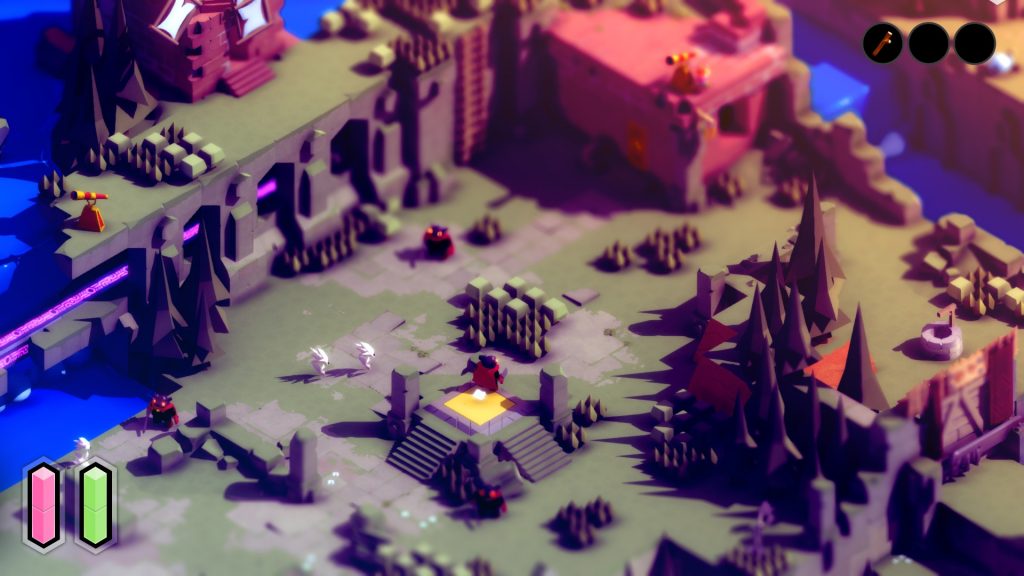
In Tunic, you play as this Fox in green tunic that woke up in some unfamiliar world without anything else equipped. And you’re as clueless as to the character you’re playing. The first few hours are just you bumbling about, taking in the world, and figuring out what is going on. There are signs but it speaks in runes you’re not familiar with. There’s no tutorial that walks you through the controls or anything like that. There’s no story setup or a goal being set either. Information-wise, you’ll start the game blind.
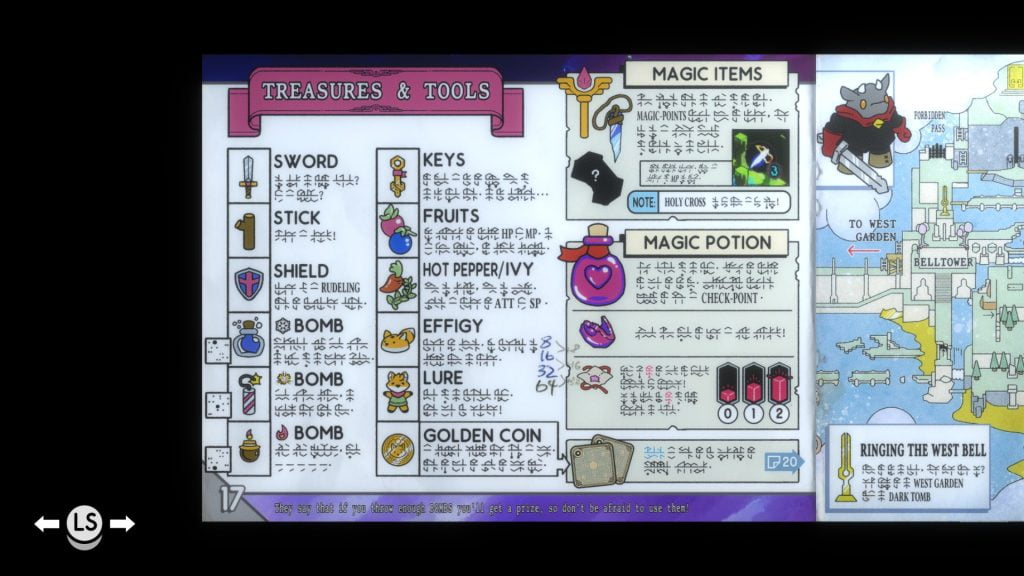
But as you slowly stumble and uncover the world, you will start to piece everything together. Around the world are scattered pages of an instruction booklet. With each page, you get to read the official strategy guide for Tunic. And I am not kidding, it’s designed as a game manual or a BradyGames strategy book you usually see back in the pre-wiki days. The catch? Most of the text is in a language you don’t understand, with only some keywords that use the language of your choice.
In that way, it captures the spirit of playing an import game. Like playing a Japanese game without really understanding Japanese. But with just enough English words sprinkled in there, you can sort of make guesses on what it says. The in-game booklet in Tunic is smartly designed with visual aids- like diagrams and button icons- that you can infer what it means without understanding the text in full. And if you don’t know what it means, it just gives you the incentive to try it out. What does this item do? How do you that thing in the screenshot?
And the use of this obfuscated booklet is also how the game nudges you to discover more of the game’s mechanics. Instead of unlocking an ability after passing a progression marker, Tunic rewards you with a booklet page that sort-of lets you know that you can always do this mechanic. It’s not spelt out directly. But that’s what makes it works. By connecting the dots yourself, where it’s you who uncover this discovery, it gives this sense of fulfilment that modern video games don’t usually have.
This part of Tunic can also be related to its unintentional soulslike inspo. The subgenre of action-RPGs popularised by From Software has a lot of cryptic and under-explained mechanics where players have to figure them out themselves or work together as a community to get the answers. It’s part of the appeal of soulslikes.
And that’s not all. There is a critical path in Tunic where there specific order of areas you should be progressing through, but the world is open enough to lead you into paths you clearly are not ready to face yet. And the forced top-down camera angle is being used to great effect, where secret paths are hidden in plain sight. If you love exploring in video games, Tunic will make you giddy.
Tunic is really something you should give a try completely blind. I’ve explicitly not spoiled the specifics of the booklet contents, or any secrets of the world. That’s something you should experience yourself.
If you like the old-school Legend Of Zelda games, and wonder what it’s like if it has Dark Souls elements instead of Skyrim, then Tunic is worth checking out.
Tunic is out now on PC (Steam) and Xbox One. It’s also currently available as part of Xbox Game Pass.