

At Computex 2026, Nvidia revealed Nvidia RTX Spark, a new “1-Petaflop Superchip” heralded as “a new beginning for personal computers.” Outside of the AI-centric hyperboles, Nvidia RTX Spark is a new Arm-based processor (designed in partnership with MediaTek) to power new slim laptops with all the feature set of an Nvidia GeForce RTX GPU.
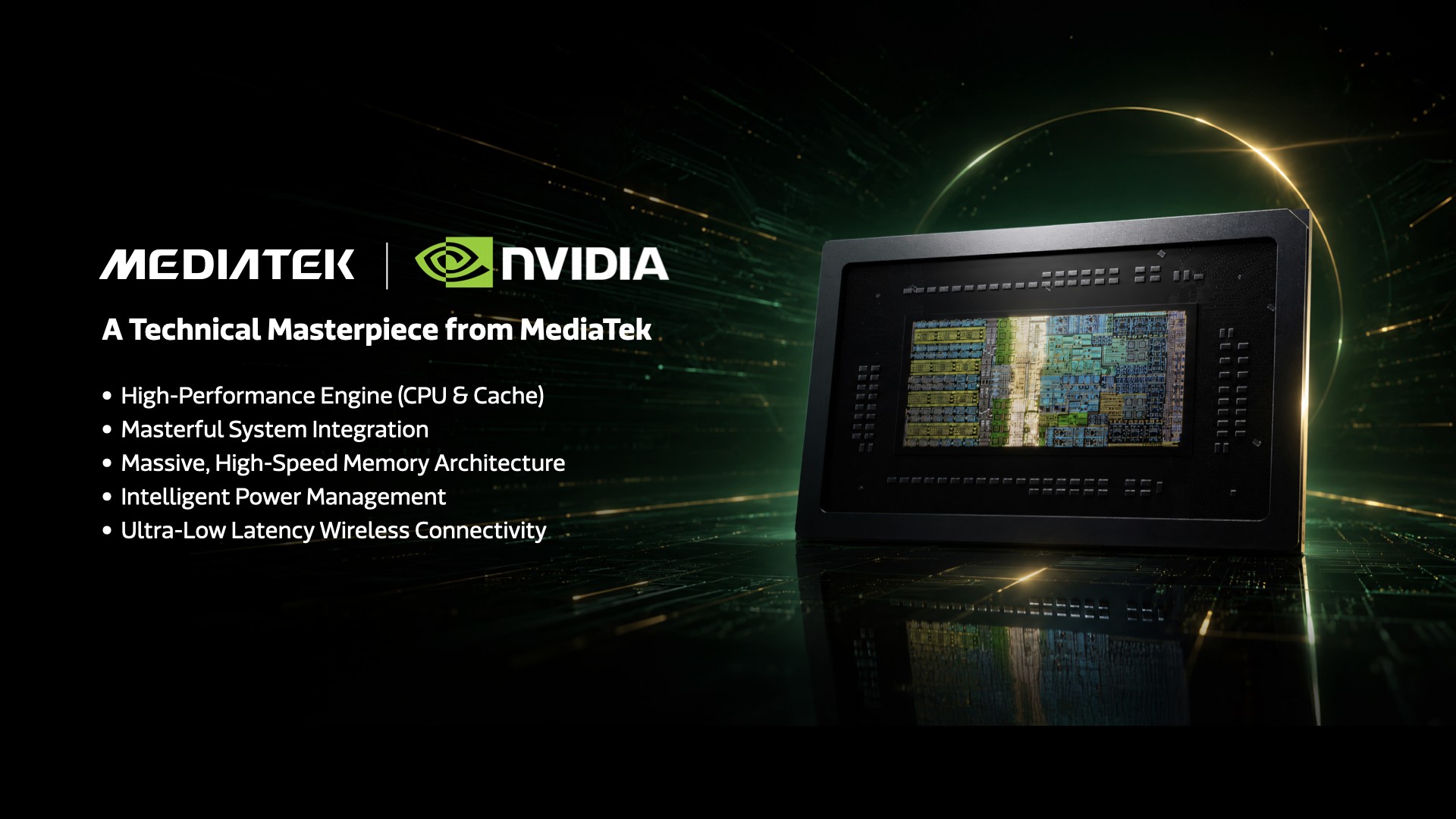
UPDATE 6.40 PM: MediaTek issued their own announcement of the Nvidia RTX Spark, giving some vague details of the processor. It’s confirmed to be a SOC (System On A Chip, a unified CPU, GPU and other otherwise separate processors in one module) with a “high performance engine” (that’s describing the CPU and cache elements which is providing raw compute power). The RTX Spark supports up to 128GB of unified memory. So, not much on actual specs. MediaTek also made mention that this is their entry point into premium PCs, as the chipmaker is usually associated in making processors for lower-end mobile devices and PCs. Original story follows.
With the RTX Spark processor, these slim laptops and PCs can play AAA games at 1440p at 100 FPS, Nvidia claims.
RTX Spark processors currently support up to the just-announced Nvidia DLSS 4.5 Ray Reconstruction tech, and can have ray tracing on as well as the lag-reducing Nvidia Reflex. All that supposedly at 1440p, 100 FPS.
More assuringly, Nvidia RTX Spark has the backing of big-name game publishers and developers, including Xbox, Remedy, NetEase Games, Krafton and more. But even more reassuringly is the support for anti-cheats as they are currently working with parties that includes Easy Anti-Cheat, BattlEye, Denuvo. This should increase the compatibility of existing games, which are mostly designed on x86 architecture Windows devices.
Outside of gaming, Nvidia also have Adobe on board to “rearchitect” Adobe Premier and Photoshop to support RTX Spark chips. Blackmagic Design, Blender and CapCut will also be supported.
Qualcomm launched its Arm-based Windows laptops, which includes a partnership with Microsoft, to little fanfare, as software support was limited. Nvidia, which at one point attempted to acquire Arm—the company behind the Arm architecture of chip design—isn’t making the same mistake, it looks like.
The launch of RTX Spark processors also continue the growing trend of slim laptops, usually not ideal for gaming as they lack the raw graphical processors and their required cooling demands, can now run games thanks to more efficient processors. Arm architecture processors are what powers today’s mobile devices.
Laptops and “compact desktops” (mini PCs) powered by RTX Spark by the likes of Asus, Dell, HP, Lenovo, MSI as well as Microsoft’s Surface will be releasing this year. Acer and Gigabyte also have plans to release RTX Spark-powered machines.
In other news, Nvidia also unveiled DLSS 4.5 Ray Reconstruction, which won’t be as controversial as the previously announced DLSS 5, as this focused on changing how ray tracing and path tracing through the AI upscaler tech, by unifying the denoiser and Super Resolution models into one.