

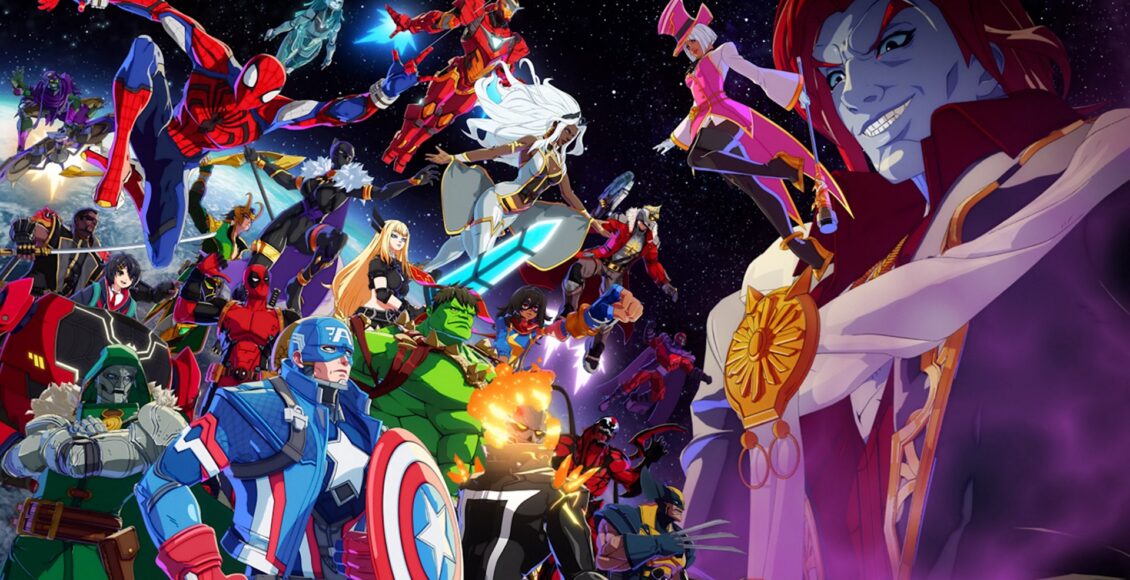
PlayStation sure had assembled a team for Marvel Tōkon: Fighting Souls. They got Marvel to make a new fighting game again, but this time with a different partner, an unlikely one in the form of Arc System Works. Not that ArcSys are anonymous in the fighting game space, it’s rather the opposites. These people are the masters of anime fighters, not just in spirit through their own IPs Guilty Gear and Blazblue, but also fighting games based on literal anime IPs, from Fist Of The North Star to frickin’ Dragon Ball.
But to have them work with PlayStation? On a Marvel game? Never would I have thought in a million years.
The combination of parties involved (including PlayStation XDev and other co-developers) is as zany of a assembly as the cast of canon teams in Marvel Tōkon: Fighting Souls. Some may see it as heresy that this new game made for those who are holding up signs of “WHEN’S MAHVEL” isn’t anything like Marvel 2 or Marvel 3 (referring to the Marvel VS Capcom series, the definitive tag fighter and Marvel fighting game series for the longest time). Some will welcome the new and fresh energy on this game’s take on a tag fighter.
But what you need to know from this review is this: even if you’re a novice fighting game player, or have no experience with a fighting game at all, but you do love the Marvel multiverse, give Marvel Tōkon: Fighting Souls a go. It’s just as fun for a newcomer to press buttons as it is looking at high-level players stunting on opps like it’s a birthday on Christmas Day. But unless you’re a seasoned member of the fighting game community, or willing to put in time to work out how to be such, like the taste of a birthday cake and the novelty of a present, you’ll wear out quick and move on to the next thing.
Presentation
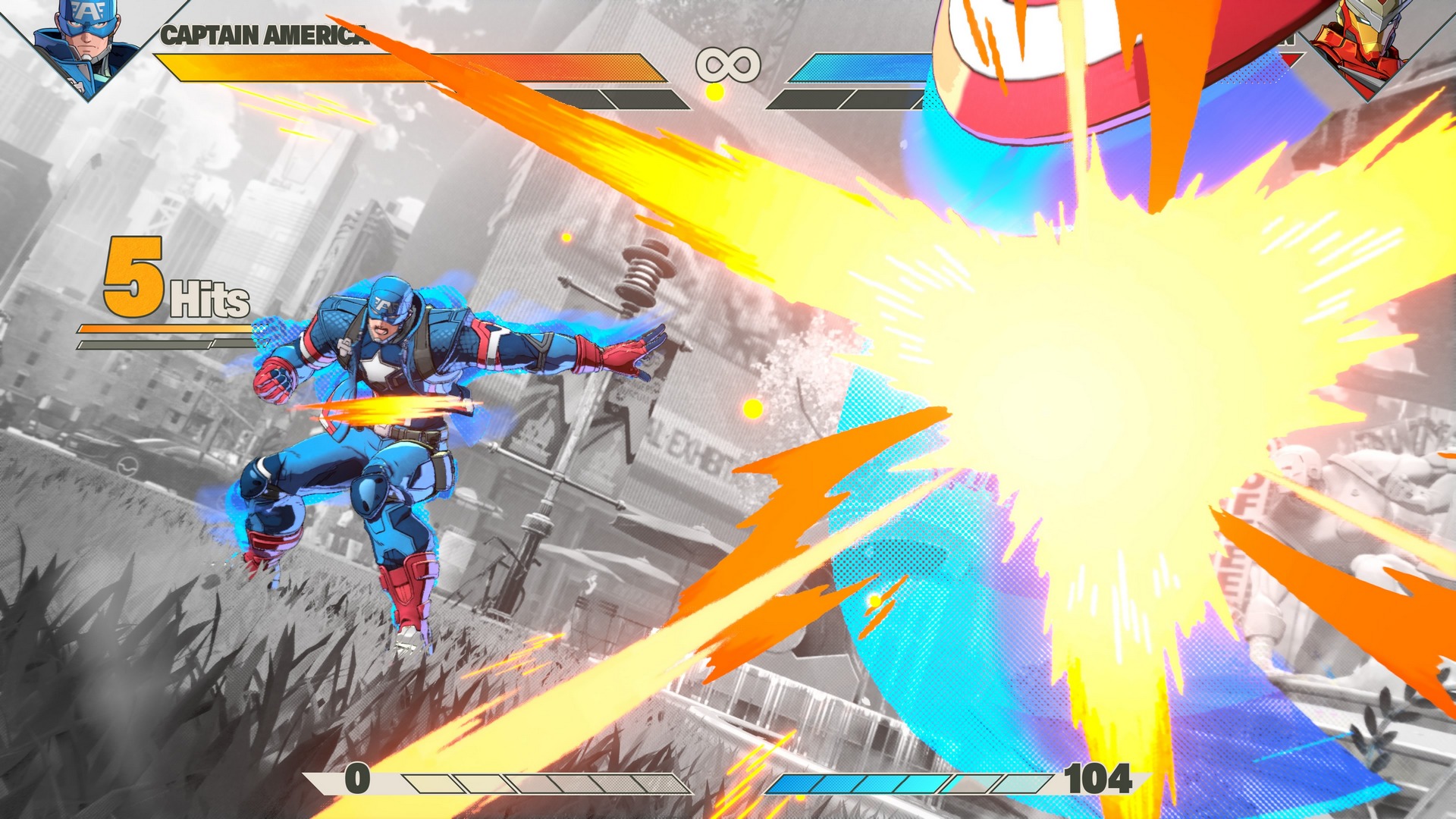
If you know anything about Arc System Works, is that they are wizards at making 2D and 2D-looking graphics. The biggest party trick with Guilty Gear Xrd and Guilty Gear Strive is that characters look like 2D sprites but are in fact 3D models. They are specifically designed to look flat and are animated like 2D sprites. In layperson terms: that’s just wizardry.
That is, however, not the art direction that goes in Marvel Tōkon. These are for sure 3D models, no trickery involved to make them look like sprites. Sure, there are some animation principles like smears and trail lines that are straight out of the 2D animation playbook, but the game makes no illusion that these are flat sprite. The look polygonal, they are animated smoothly like a game designed to look good at 60+ FPS during gameplay.
I don’t think it’s a bad thing, but I do see it as a practical thing: the game has co-developers on board, and we’re expecting to see more costumes for the fighters, a rare thing in an ArcSys game. So keeping the models looking standard without that ArcSys wizardry is an understandable decision in that regard.
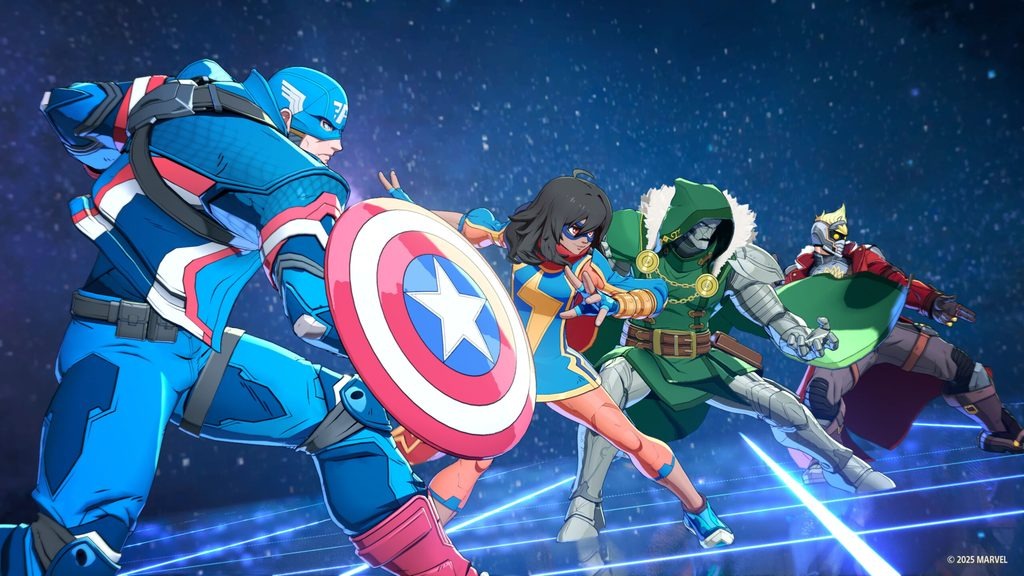
The design of the fighters, however, is quite the hit. At least for some of them. Marvel Games insisted for Arc System Works to not do a faithful depiction of these Marvel heroes and villains, but put their own Japanese twist to them. And it works great! Iron Man’s suit is undoubtedly Gundam-coded. The moefication of Peni Parker, Ms. Marvel and Danger was a good call, especially for Danger who only appeared in the comics as a menacing killer cyborg rather than someone who can pull that rich girl sweep kick. Blade has more of a samurai influence, as in this incarnation he literally studied the blade in Japan, said blade being the Muramasa.
Though ultimately, some of the more iconic characters don’t really stray too far. Deadpool’s still Deadpool. Doctor Doom looks like Doctor Doom. Storm and Wolverine still registers as typical Storm and Wolverine to a non-die-hard Marvel fan like myself. The characters I recognised from Marvel’s Midnights Suns, Magik and Ghost Rider (Robbie Reyes), are not too different from what I remember when I first discover them. Well, Magik has more of that kusogaki energy that compliments her steely cold personality in this iteration, but still, not too far from what I expected.
In other words, the developers didn’t fire the full anime beam, just enough to give it a different look and feel from other Marvel games that tend to use a more realistic approach to character design.
If you think Marvel Tōkon is an anime game, it kind of goes there halfway. They don’t go full-hog anime.
Music-wise, Marvel Tōkon has composed quite the album. From its anthemic J-Rock that complements well with its anime-style opening sequence, to the character themes having specific genre of music associated with them.
Iron Man, as the name implies, gets the expected heavy metal banger you’d hear out of Guilty Gear. Fitting given the birth of heavy metal music is widely cited to be the influence of Black Sabbath’s song named Iron Man. Ms. Marvel gets a girly pop tune. Magik’s has goth girl energy from the enchanting orchestral chants and screamo vocals. Ghost Rider has a poppy prog rock tune that would fit in a Coheed And Cambria album. And then you get some oddballs, like Loki’s more jaunty, folklorish beat, the swinging, jazzy NYC tunes of NYC’s web-slinger Spider-Man, and the raunchier jazzy bop of Green Goblin’s theme. Put the music on random, and you get to hear the diversity of sound across the characters and stages, it’ll be a while before you get tired of listening to the same song thanks to its variety.
Marvel Tōkon has the benefit of a PlayStation Studios project by having voiceovers across multiple languages. And that perfectly leads to reintroduction of a feature seen in fighting games of yore: specifically selecting a voice language for specific characters. It’s a lovely little feature, and while not every character has a voiceover in their native language, you can close enough replicate that Tekken experience where somehow everyone talks in their mother tongue and just happen to understand each other. It’s more of a Street Fighter X Tekken situation, rather.
The Marvel Tōkon UI has me with mixed feelings. The way it looks and feel is exquisite. Button presses feel immediate and punchy, the font choices are great, and I don’t mind the comic book construction sheet aesthetic where most of it are laid on faded-out white paper over blue guidelines which I imagine is something actual Marvel artists and writers work with on the daily.
What confuses me is the layout of the main menu. Some menus are hidden behind the quick options. Training isn’t just its own menu, nested together with the arcade menu for whatever reason. The idea is that, over time, you’ll have a selection of menu options you’ll regularly visit and pin them down in the quick select menu. It’s a feature I’ve seen in other fighting games and is handy for experience players who’s here to play Marvel Tōkon as a pure PVP experience and none of the extra content. That doesn’t excuse the poor layout of the menu for less experienced, and newcomers, to navigate.
Gameplay performance on PS5 is absolutely rock solid, though I wish I could say the same for PC. At launch, it sounds rough, but the game has been regularly updated since, but as I only play the PS5 version, I can’t comment more on the status of the PC version.
Overall, the presentation of Marvel Tōkon: Fighting Souls has a great premise, but is executed with some restraint. It’s not the wildest looking Arc System Works game as a result, but you can still that this is made by them with all the minor touches you’d expect, especially the heavy metal music.
Gameplay
Marvel Tōkon: Fighting Souls made quite the statement when it was revealed. Not only was it a tag fighter, but a 4V4 tag fighter. The context being that 3V3 tag fighters are already bollocking complicated to the uninitiated, but to the passionate, loveable sickos that go “yeah! yeah! yeah!” on every hit of a combo, this is like adding extra catnip into their regular dopamine intake. It’s crazy. How the hell would you ever play this game?
Turns out, it’s not too complicated to grasp the basics. The game does a great job at explaining all the game-specific mechanics at play, and the philosophy of how you should use your four-fighter team. Technically, you should start with just maining one and treat the trio as just assist characters. All four characters share the same life bar, and the three slots that the extra teammates are placed determines what sort of assist attack that pops when you hit the right buttons.
Players who master the system, of course, will naturally make use of the active tag system to switch characters around mid-combo and take on different playstyles in the same round to throw off the opponent. But a new player, or a beginner, is not expected to do as such. Even the highest level of CPU bots won’t tag and switch characters mid-round or even mid-match, they just use the extra team as assists.
It’s nice that Marvel Tōkon integrated simple controls and auto-combos just as part of the game’s natural system. Instead of it being an option, anyone can opt to use these as crutches, whether that because they can’t perform special move motions consistently, or in high-pressure moments where it’s safer to use simple inputs. Special moves can be done by press the designated button (R2 on the PS5 controller by default) and an optional tilt direction. So anyone can spam fireballs by just hammering R2 over and over. That said, special moves with the “technical” input does more damage, so oldheads are still rewarded for having the muscle memory of playing fighting games.
The auto-combos are fun, it’s a complete combo string that ends with a special move of some kind as long as you press the same buttons over and over without extra input. In other words, button mashing. It gives you an idea of what a bread-and-butter combo looks like, which then you can discover yourselves.
And that’s where the fun of Marvel Tōkon: Fighting Souls comes, when you start hitting buttons that links and you figure out your own combo. The revelation that you can opt to not just mash the same button over and over after getting that universal air launcher to hit and start doing goofy stuff like juggle them with well-timed fireballs that locked them from air recovery, is proper stuff. That’s what fighting games is all about. There are multiple moments where I felt an epiphany, of where I truly start to see what makes fighting games so great in the eyes of the long-time community that continues to play this niche genre. Marvel Tōkon is approachable enough to turn a newcomer to get into fighting games… up to a point.
If you’re feeling unsure to jump into multiplayer, the single-player CPU gives a good fight even at normal Level 3 difficulty. They come alive at Level 4. By Level 5, you better start learning how to mix up your neutral game and land overhead attacks, because they can block, and if you can’t block, that’s a 15+ combo you have to eat, regularly.
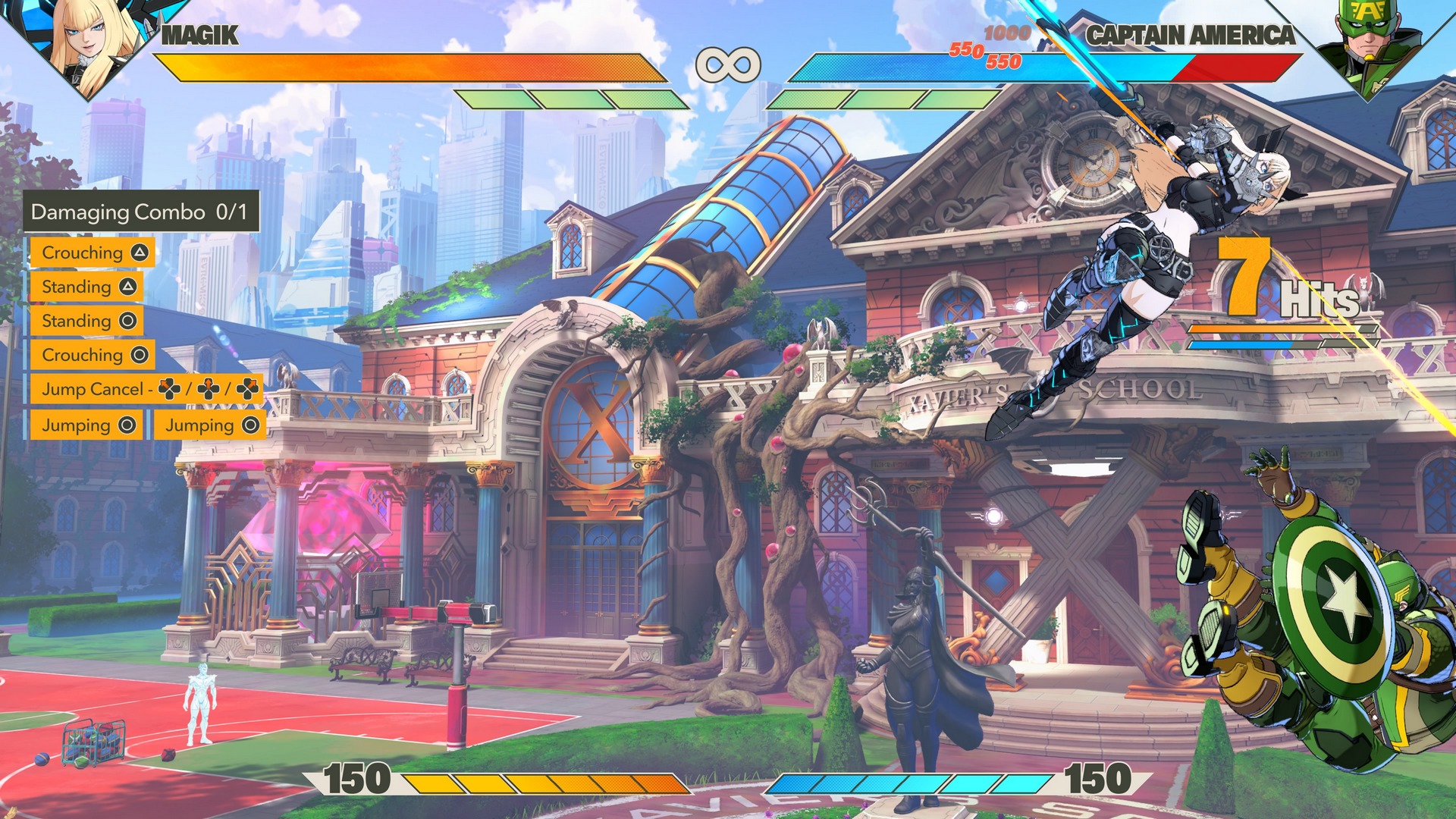
While Marvel Tōkon: Fighting Souls has done a good job in explaining its game-specific mechanics, it does the same thing most fighting games usually do and assume players just know how to play fighting games. This is where the point I alluded earlier lies. It does such a good job at guiding newcomers to understand fighting games, but abandons them mid-way.
Pressing buttons, popping off those Assemble moves and such are all well and good, it got me playing a lot in the first week of launch, but then I hit a ceiling and just lost interest.
This is due to me missing some important knowledge in how to play fighting games. How do you win in the neutral game otherwise known as, don’t laugh if you never heard this, footsies? How do you withstand pressure?
But let’s back up a bit, some of the important concepts that you can encounter like in Combo Trials also just appeared out of nowhere without much of an explainer. What the hell is a jump cancel? I know what it means, I know what it looks like, but there’s none of that guided tutorial that walks you through such concepts as the game assumes that you probably know it, as any fighting game player would.
And even before talking about fundamental philosophies in fighting games, the game also missed a trick in not having more drills that beginner and novice players can practice and get good at. Props to them for having some preset dummy actions in training mode to give players ideas of how to make use of the tool. And surely advanced players can recreate situations where they have trouble with and drill it out until they overcome it consistently. But players at the lower skill level has really nowhere to go.
Some of the combo trials require specific inputs that previous tutorials don’t drill inexperienced players. While the combo trials themselves are good in escalating difficulty, they don’t do a good job in making sure not to set up less good players to fail.
There are definitely fun ways in how you can gamify these fundamental skills to get players more acquainted with fighting games. I see one in the story mode, Episodes, where it could be repurposed into a training drill. But these aren’t issues unique to Marvel Tōkon: Fighting Souls. It’s fighting games in general.
Marvel Tōkon: Fighting Souls’ seemingly complicated game systems are actually easy to learn, and of course hard to master. But like in many fighting games, it failed to address the issues which caused new players to come and go: it assumed everyone understand the basics and philosophy of fighting games.
There’s something special about fighting games that it is rooted to its community, the coin-munching spars people get together at arcades created a video game that understands it orally through the community rather than the game itself. I think that’s freaking cool, and I love that fighting games is basically the only genre of games still around where the best way to play is to actually learn them from more experienced players who are willing to teach.
While I don’t speak for the majority of gamers, I do feel that a lot of them, myself in particular, prefer to learn on my own, through the medium itself. It’s an ongoing struggle fighting game have had, and there are definitely efforts to get it more approachable, like how simple inputs are now becoming a standard feature, and some games making use of ghost data to replicate someone’s playstyle offline to train against. But more needs to be done to get less skillful, and less motivated, players like me to stick around, lose a lot to get good and learn. Marvel Tōkon: Fighting Souls, and fighting games as a whole, needs to do more than just the usual single-player content.
Until then, no game would “save” the fighting game community. I’d argue that the community doesn’t need saving, it’s thriving in their own bubble. But to really expand the fascination and fandom of fighting games, we need to do more to get people understand what fighting games is really about, not even at a high level necessarily, just enough to get them hooked at the spirit of self-improvement, competition and reading the mind of the opponent.
Content
Marvel Tōkon: Fighting Souls has enough content to tick all the boxes of a premium fighting game. There’s five different storylines to follow in the story mode, Episodes, as you play as all the five different canon teams in their journey through a tournament to find Earth’s strongest warriors to face the Champion, where losing means the planet is doomed.
The story mode itself is nothing to write home about, as it’s mostly a linear set of fights but with more cutscene and dialogues delivered in a comic book style, as in it’s penned and drawn by real writers and artists, as if they are supposed to be comics, with the panels, speech bubbles and such albeit to be read from right-to-left, manga style. You can see how the game continues to flip-flop if they should be authentic to Marvel or put a Japanese style to them as the Episodes are drawn by either a Marvel artist or a guest mangaka.
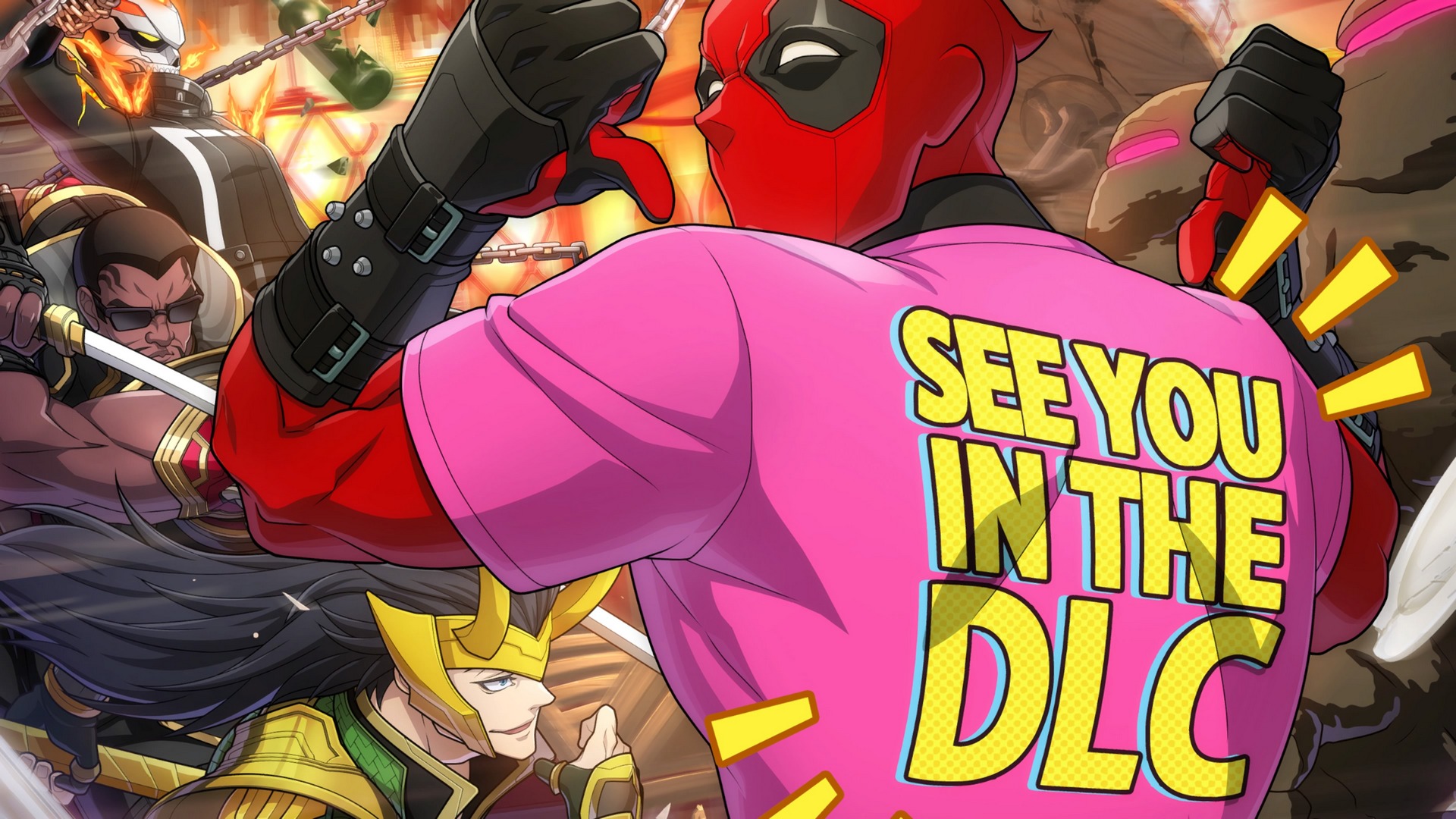
At least the storytelling, despite the constraints of having to make it snappy, delivered in a comic book form, and are supposed to be preamble and post-fight banters, have heart. There is enough room for some heart-to-heart introspection. The Samurai Outriders story, the most out-of-pocket selection of the canon Marvel Tōkon teams, has enough space for Deadpool’s 4th-wall-breaking antics (at the time of this review is published, we already know what Deadpool was hinting at about Thor) and a character arc for Ghost Rider. Cap and Iron Man still get to do their usual headbutting ritual (that can be horrible enough to have caused a civil war) and have it over in record time. Even the Knights Of Doom, the team of villains, has some fun character writing that isn’t just about Doctor Doom’s immensely huge ego (though it is for the most part.) There’s a lot of appreciation to the greater Marvel lore, especially the sci-fi bits beyond Earth—the Champion is an old Marvel character, apparently—which is cool to see.
Outside of Episodes, there’s also an Arcade Mode where it employs a roguelike-ish branches of who you can face in the next round, all leading to one member of the canon teams as the leader that you must fight to unlock some new art piece. There’s also Survival Mode, which is a rougelike thing with random drops and upgrades you can pick after every fight, but once you’re KO’d that’s run over. By level 80 or so, these opponents are good enough to make you feel the touch of death, so they’re pretty high level CPUs that know what they’re doing. Essentially, scrubs won’t make it over to the final boss at level 100. I am such one scrub.
More advanced players will make use of the lobbies and online matchmaking to keep playing and learning. But I think the average player will find themselves content to at least 10 hours worth of play just by trying out the single player modes. Not much, but it is standard for a fighting game. Though one can argue that standards have been significantly raised by Street Fighter 6’s expansive RPG adventure of a story mode, and Tekken 8’s bombastic equivalent which turns itself into Tekken Force by way of Musou in the latter half. That’s not accounting Sega’s ambitious single-player offering for the upcoming Virtua Fighter Crossroads. This is to say, Marvel Tōkon could have done more to keep up rather than just sticking to the standard.
Personal Enjoyment
I mentioned earlier that Marvel Tōkon: Fighting Souls made me had an epiphany, and I truly mean it. I dabbled with fighting games but never consider myself any good, and never really make much effort to get good, knowing how much it takes and how my hands are not as reactive as my younger self would be. I just don’t want to put in the time to grind and work on my inputs and combos or learn how to intuitively read numpad notations and all that. It’s a lot! So I always treat fighting games as something that I just want to casually get in and out of, a seasonal thing I do, but not what I always do.
But I never got something clicked that hard before I played Marvel Tōkon. I was good enough to just rely on auto-combos and universal moves taught in the tutorial, but I played enough that I started to find my own routes. My own bread-and-butter. I figured out what connects. It truly feels like some machinations in my brain finally seeing the high level play that the FGC is obsessed about.
It was enough that when I got frustrated at some unexplained mechanic, I hop off to another fighting game that I know feels more intuitive: Dead Or Alive 6.
Look, I’m more of a 3D fighter fan than a traditional 2D fighter, so of course I naturally gravitate towards games with less long combos. Marvel Tōkon, a tag fighter, is a literal antithesis to that. So of course this happened.
But the fact that this game sparked that fire should be noted. You can get people get into fighting games.
That said, I don’t think that’s the problem with fighting games right now. Getting in is easy. It’s staying in that’s a hard sell.
How do you get players still playing long after they’ve done what they wanted from the single-player content? Should these games want players that only engage in single-player content? How can we get players to fall in love with a genre where you will naturally lose more than win as you play, and how to ensure that they will get better as they play more?
I think fighting game makers still have a lot of questions need answering if their goal is to make a fighting game that reaches beyond the FGC. I don’t think Marvel Tōkon: Fighting Souls is it, and the fact that the news of rival tag fighter 2XKO basically calling it quits around the launch window of Marvel Tōkon really was unfortunate, as all that hype about fighting games in the mainstream is suddenly gone.
This review is backlogged two months since launch is because of that sad news. It hit me hard, looking at people going in circles talking about how do we “save the FGC” that I just don’t feel like my initial review was the right tone to go for. It would be something along the lines of “this game is really good!” But now that I sat on this, I feel like the tone should be “this game game is really good but not enough.” Again, Marvel Tōkon: Fighting Souls won’t save the FGC, the FGC isn’t in need to be saved anyway, they’ll grow stronger by the year. But if you need to sell a fighting game to the general masses, following the templates of yore to a tee is not it. It needs more swings. Maybe not swing it like 2XKO did, but good on them for swinging like that and miss so no one should try that same thing again.
Despite the general sentiments of the state of fighting games at large, I still think Marvel Tōkon: Fighting Souls is a fun and worthwhile time, even you get out of it mostly from playing against CPUs. The roster of characters is solid, they are all fun to play, the modes available are enough of what you’d pay for a fighting game like this and there’s more to come.
On a personal note: it’s so cool to get to review a game where Kieron Gillen is credited. Before his current work at Marvel, Gillen used to write for PC Gamer in the early 2000s, and I grew up reading his body of work, which eventually inspired me to be in this line of work. That piece on Thief: Deadly Shadows’ The Cradle, which half behind-the-scenes look of how the level was made and half a chilling play-by-play walkthrough really left a big impression on me. It was a magazine’s equivalent to something like a Civvie 11 video, not in tone—Civve’s take on The Cradle is a little less dramatic—but in its purpose, to give you a broad painting of what’s actually like to be there, with the occasional drip of real facts on how it was made. It’s cool to see that writing chops that made me captivated of a world I never set foot in (really, I still haven’t played Thief 3 after all these years) is still being expressed in a different medium that I now get the chance to professionally cover through this video game.
Verdict
Marvel Tōkon: Fighting Souls made tremendous effort in making a fighting game approachable. You can immediately have fun mashing buttons, the many different systems at play can be learned quick enough. The skill floor is definitely quite low for a tag fighter.
However, the game made little to no effort in converting the players at the lower skill floor to make the climb up to the ridiculously high skill ceiling this game has. The single-player content, while entertaining and executed well, would not make novice players stick around for long.
There’s also the unfortunate but avoidable problems with the PC version that’s been impacting performance, though now that it’s been months since launch, it should be improving.
All of that shouldn’t take away from the great success that Marvel Tōkon: Fighting Souls accomplished: make a supposedly complex 4V4 tag fighter be appealing, fun and approachable enough for anyone to give a fighting game a chance. This is one of the most approachable fighters I’ve played recently.
Now, more than ever, the fighting game conversation needs to move from making the game approachable to figuring out how to entice uninitiated players to learn how to get good in fighting games and fall in love with the experience and sticking to it for the long term.
Played on PS5. Review copy provided by the publisher.
Marvel Tōkon: Fighting Souls
Marvel Tōkon: Fighting Souls made tremendous effort in making a fighting game approachable. You can immediately have fun mashing buttons, the many different systems at play can be learned quick enough. The skill floor is definitely quite low for a tag fighter.
However, now, more than ever, the fighting game conversation needs to move from making the game approachable to figuring out how to entice uninitiated players to learn how to get good in fighting games and fall in love with the experience and sticking to it for the long term.
- Presentation 9
- Gameplay 8.5
- Content 8
- Personal Enjoyment 8.5